
The Anchor and the Tide
In the seventeenth century, mapmakers often filled the empty spaces of the oceans with drawings of sea monsters, a way of acknowledging that what we cannot see is often more formidable than what we can. We are creatures of the shore, tethered to the solid earth by habit and history, yet we spend our lives gazing toward the horizon, waiting for something to arrive from the deep. There is a quiet tension in this waiting. We build our walls and our markets, we stack our goods and mark our boundaries, all while the tide continues its slow, rhythmic erasure of our certainty. It is a strange paradox: we define ourselves by the permanence of our stone and mortar, yet we choose to build at the very edge of the shifting, restless blue. We are always in the process of anchoring ourselves to a world that refuses to stand still. If the city is a promise of stability, what does it mean that its heart is so often found at the water’s edge, where the land finally gives up its claim?
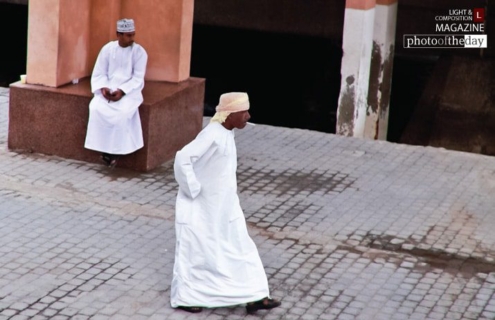
Aude-Emilie Dorion has captured this delicate balance in her work titled In the City. She invites us to consider how the weight of our daily lives rests against the vast, fluid history of the sea. Does the water hold us, or are we merely waiting for the next tide to carry us elsewhere?